



110+
Big banksMonolinesCredit unionsAlternative lenders
One file, 110+ lenders
A bank shows you a single product. I take one application and shop it across 110+ lenders so your file competes for the sharpest terms.
Access to 110+ lenders, and one advisor who explains every step. One application, compared across the market, built into a mortgage strategy, not just a rate.

Homeownership 66.5%: Statistics Canada, 2021 Census.
One application, 110+ lenders. A few of the banks, credit unions and lenders your file can reach.
Hover to pause


Four reasons clients across Ontario stop shopping banks and start comparing lenders, through one file, with one person accountable for the outcome.
A bank shows you a single product. I take one application and shop it across 110+ lenders so your file competes for the sharpest terms.
You work with me from the first call to funding day. No call centre, no handoffs, just a direct line to the person actually managing your file.
Regulated advice, in plain English, with everything documented.
Rate matters, but the structure around it matters more. Every piece is built around your goals, not the lender's quota.
Short video guides with the full written version alongside: renewals, lenders, default insurance, fixed vs variable, the stress test and refinancing, in plain English.
Read the blog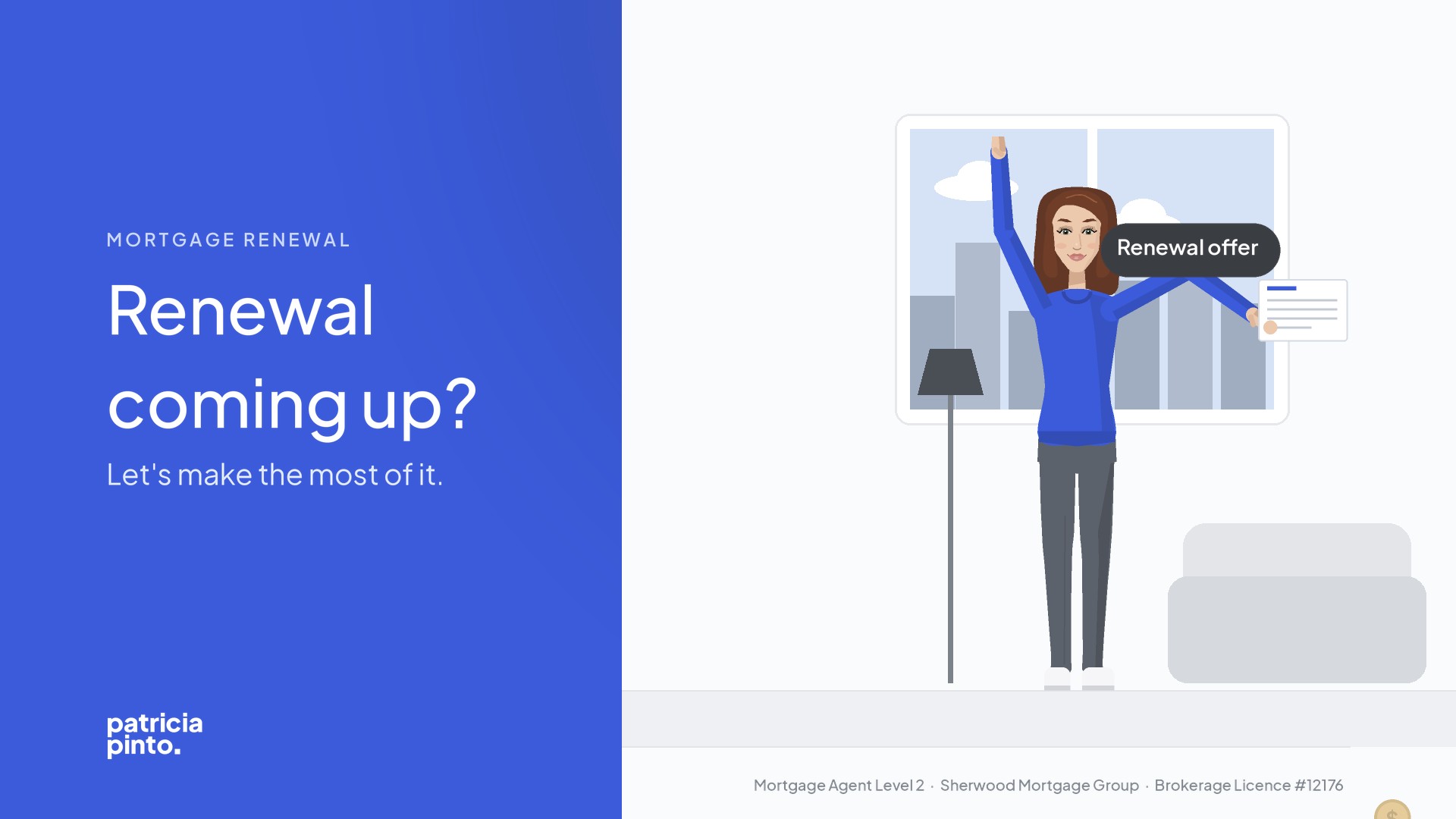 1:02
1:02Your renewal is the one time you can switch lenders with no penalty. Here's how to use it.
Watch and read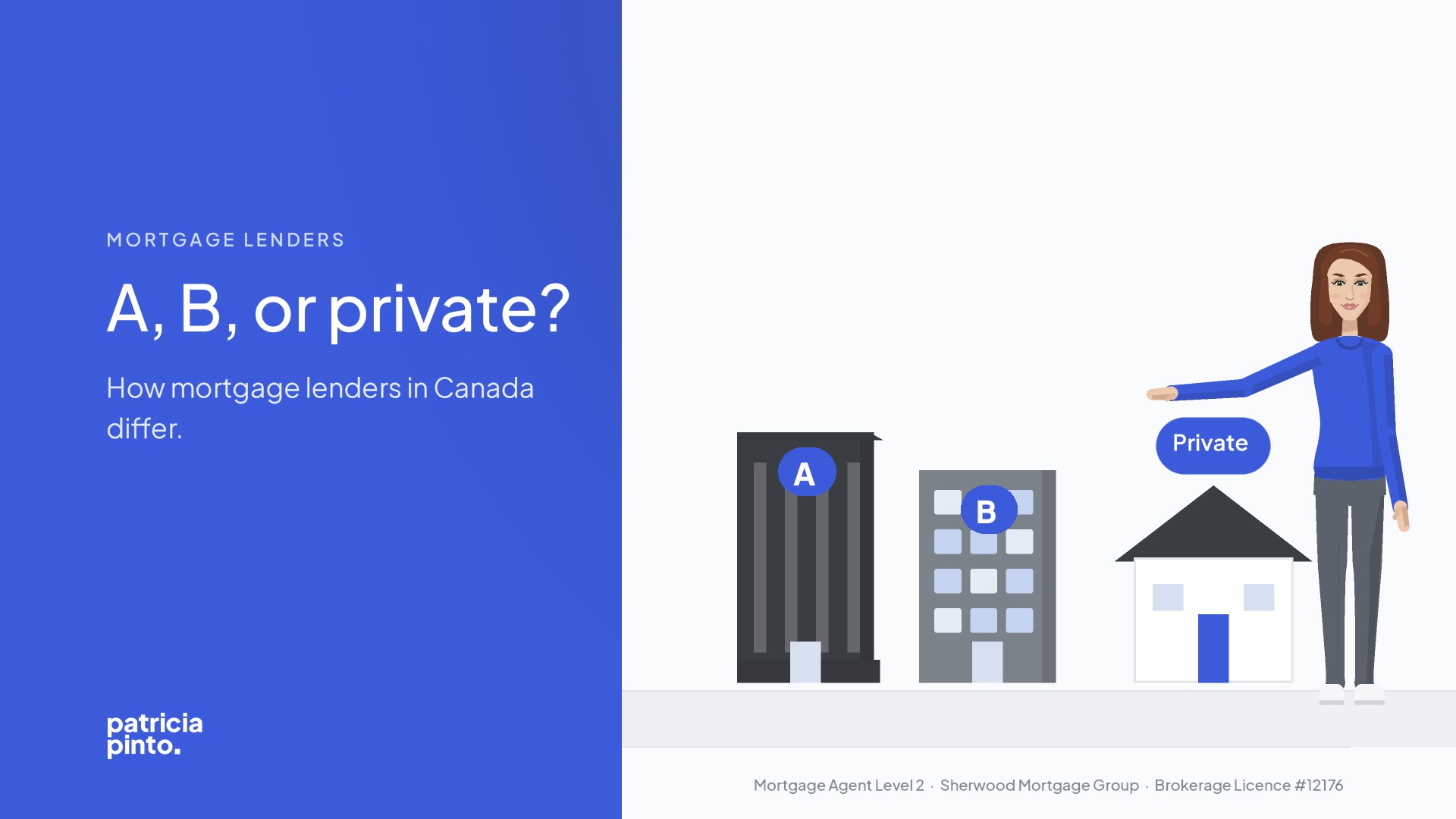 0:58
0:58Banks, trust companies and private lenders each serve a purpose. Here's who each one is for.
Watch and read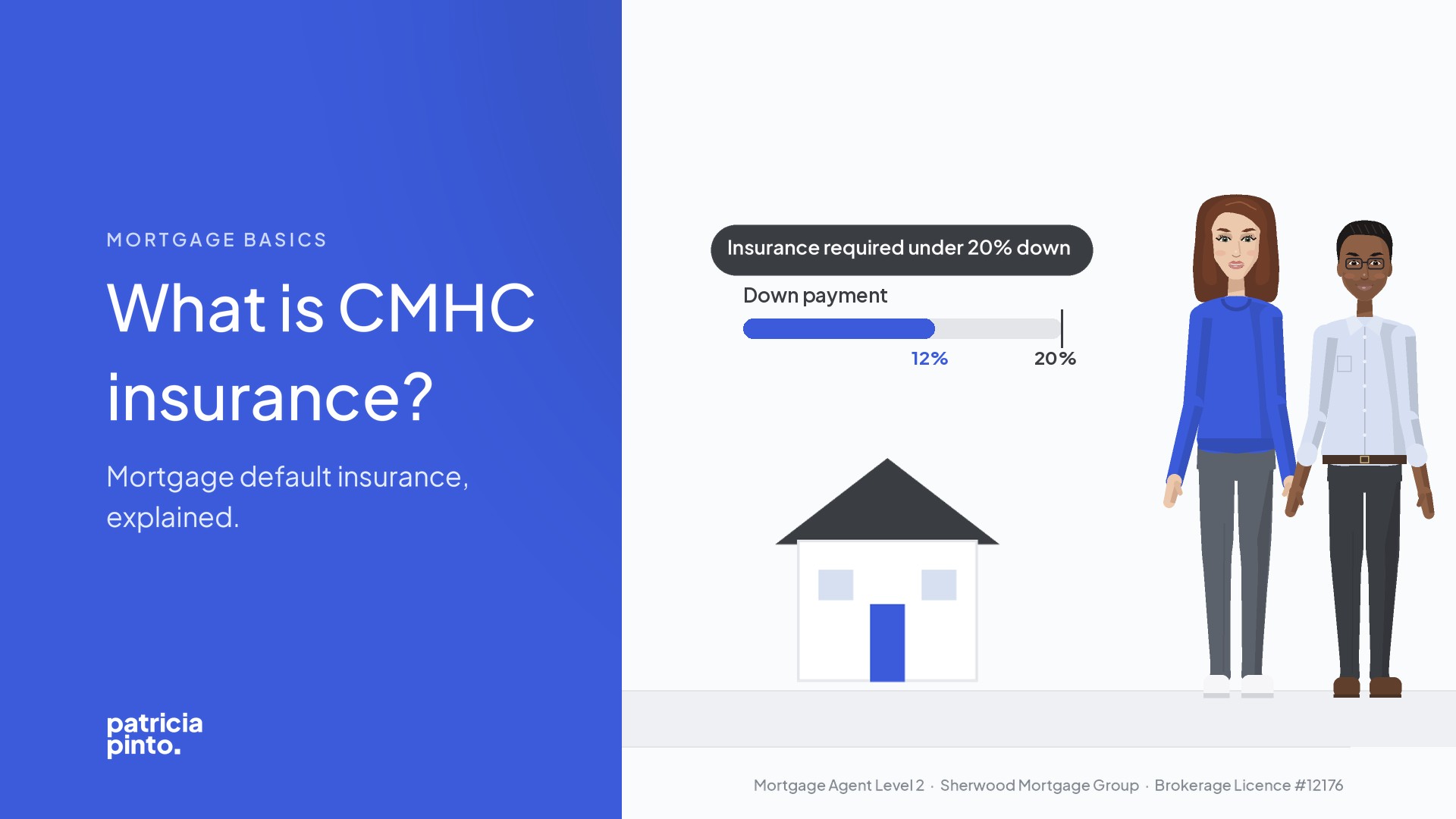 0:58
0:58Buying with less than 20% down? Here's what default insurance is, who it protects and what it costs.
Watch and read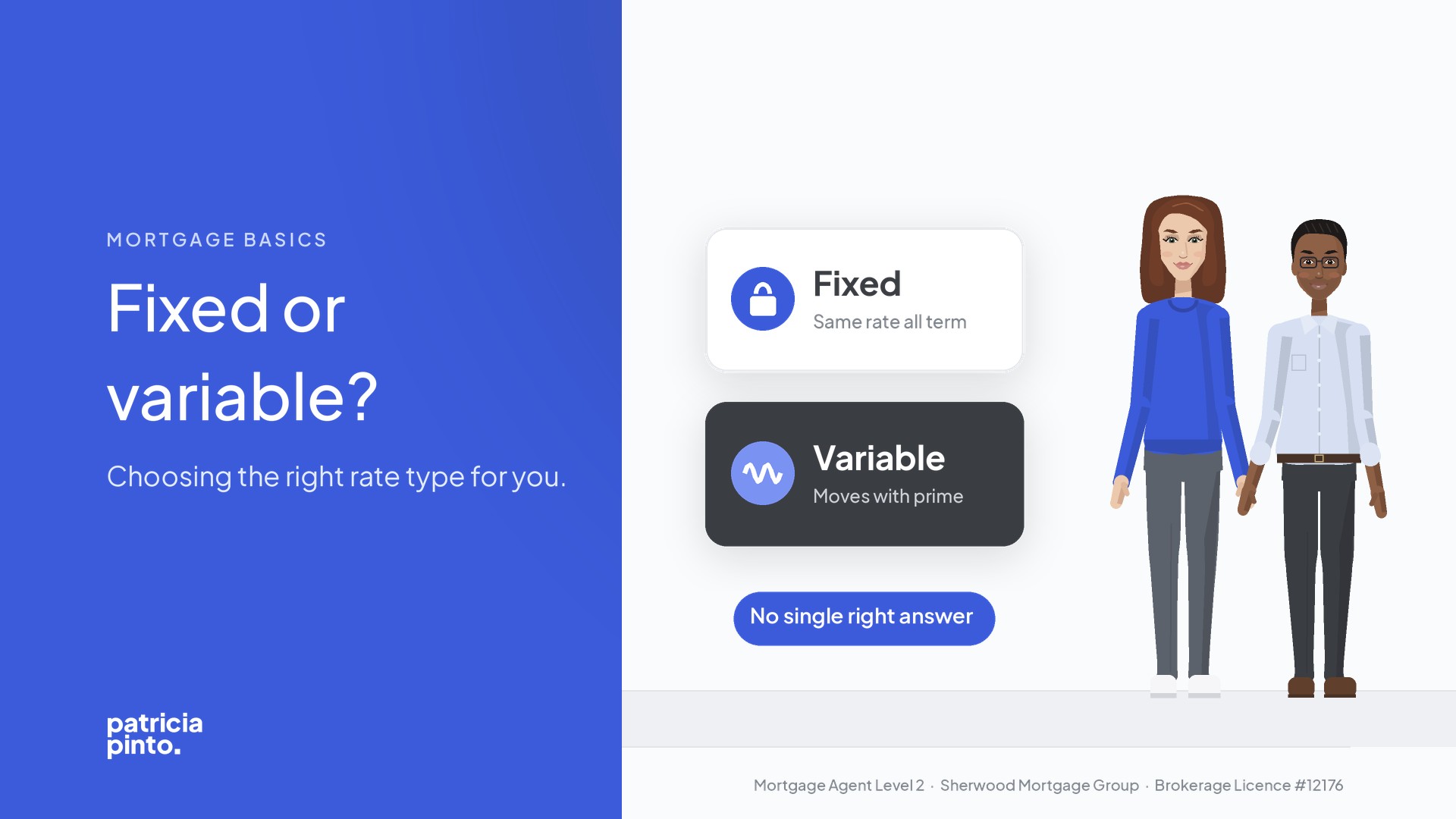 0:55
0:55Predictable payments, or a rate that moves with prime? Here's how to weigh the two.
Watch and read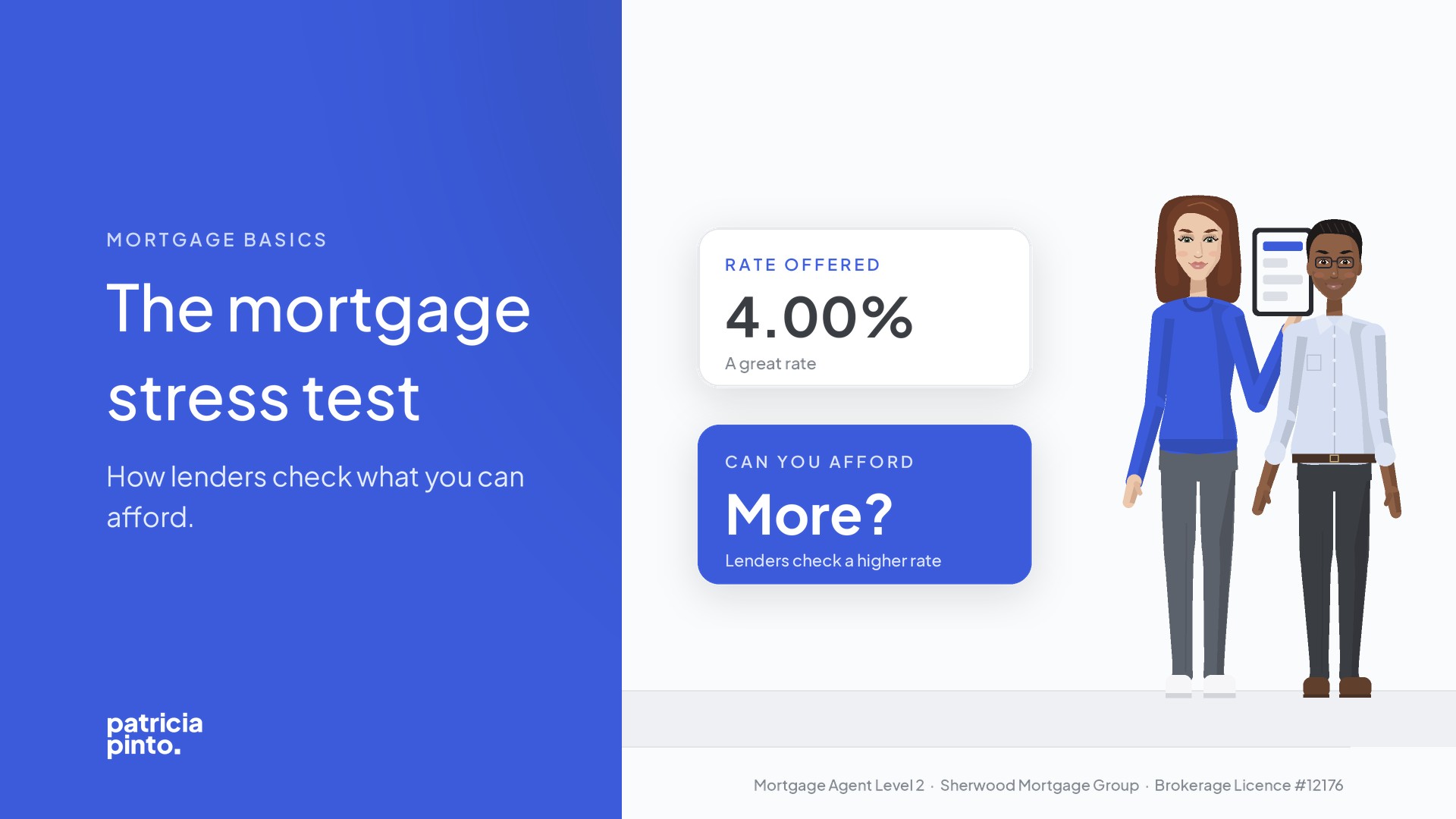 0:53
0:53Why lenders qualify you at a higher rate than you'll actually pay, and what it means for your budget.
Watch and read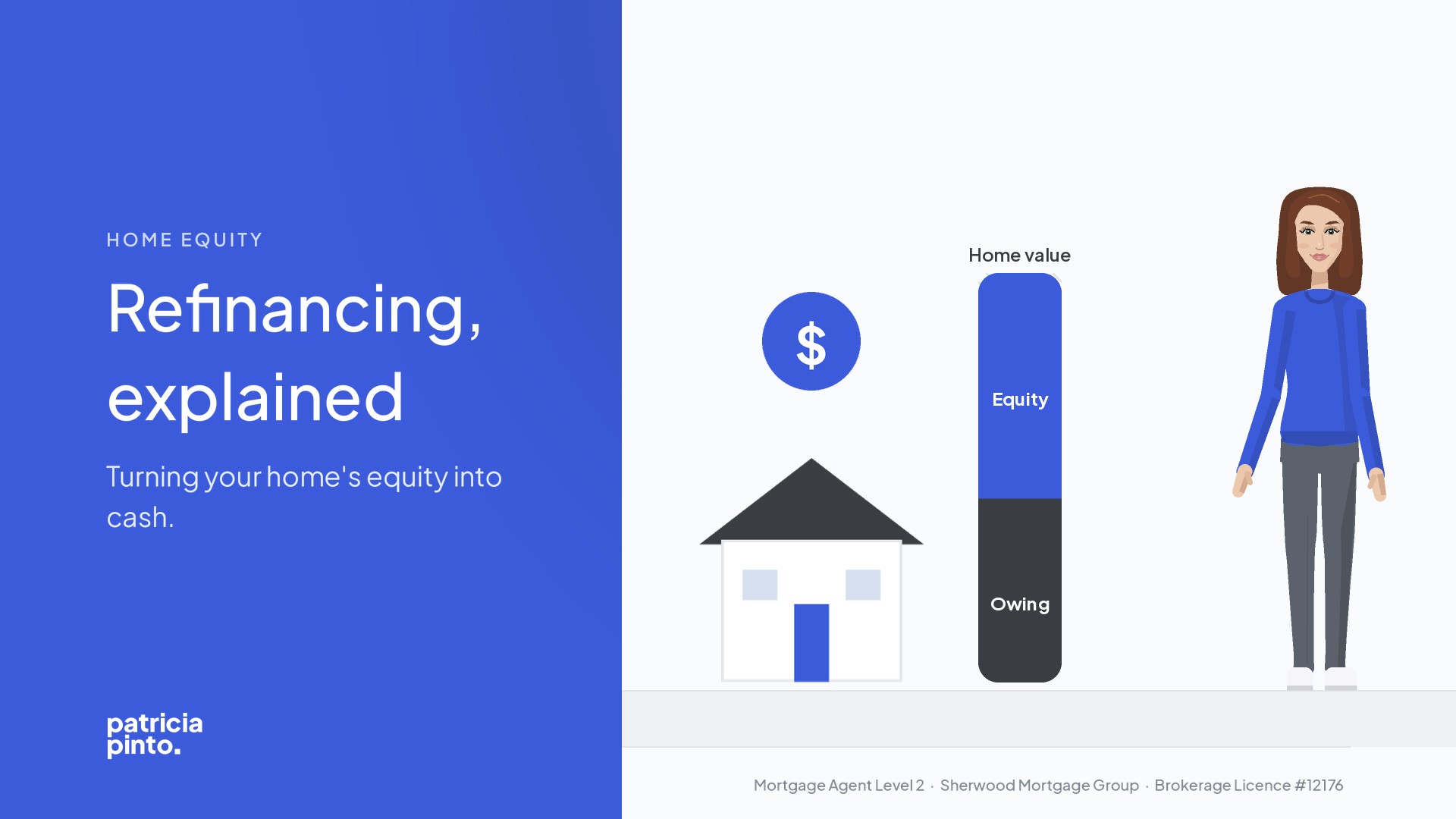 0:54
0:54How much equity you can usually access, and how a refinance, HELOC or second mortgage compare.
Watch and read Free guideThe Ontario Home Buyer's PlaybookDown payments, the stress test, land transfer tax, and the mistakes that cost buyers thousands.
Investor ClubBuilding a real-estate portfolio?Financing strategy and market notes for scaling a portfolio. No noise.
@pinto.mortgageFollow along on InstagramMarket notes, mortgage tips and behind-the-scenes.
Free guideThe Ontario Home Buyer's PlaybookDown payments, the stress test, land transfer tax, and the mistakes that cost buyers thousands.
Investor ClubBuilding a real-estate portfolio?Financing strategy and market notes for scaling a portfolio. No noise.
@pinto.mortgageFollow along on InstagramMarket notes, mortgage tips and behind-the-scenes.
Four clear steps from first hello to funding day. No jargon, no pressure, no obligation.
A quick chat to understand your situation, goals and timeline. No pressure, no obligation.
We review income, savings, credit and borrowing power so you know exactly what you can work with.
I explain your options and what lenders look for, then match your file to the right one across 110+ lenders.
A clear action plan through to approval and funding, with me on your side the whole way.
Buying, renewing, refinancing, investing or self-employed: there's a strategy for your situation.
A financing plan built around the home you actually want.
Learn more Your first homeOnly 66.5% of Canadians own a home. Let's make you one of them.
Learn more Renewing your termDon't just sign the renewal letter. Compare it.
Learn more Using your equityPut the equity you have already built to work.
Learn more One simpler paymentTrade several high-interest payments for one you can manage.
Learn more Building a portfolioFinancing that scales with your real-estate ambitions.
Learn more Business ownersYour income is real. We just need the right lender to see it.
Learn more Flexible solutionsWhen the answer from the bank is no, there is still a plan.
Learn more Access equity fastTap your equity without touching your first mortgage.
Learn more Build or improveFinancing that funds the home you are creating.
Learn moreHomeownership is still the clearest path to long-term wealth in Canada. My job is to get you in the door, with a mortgage built to keep you there.
Statistics Canada, 2021 Census.
Payments, affordability, land transfer tax, renewals and refinancing, using semi-annual compounding, the stress test, CMHC premiums and Ontario and Toronto tax rates.
What will my payment be, and how much interest will I pay?
How much home can I qualify for with my income and down payment?
How much land transfer tax will I pay on closing, after rebates?
Should I sign my renewal letter, or compare it?
What happens if I roll higher-interest debt into my mortgage?
 Agent Lic. #M22000988
I'm Patricia Pinto, a Mortgage Agent Level 2 with Sherwood Mortgage Group Inc. I started in mortgage sales at RBC and hold a B.Comm in Accounting from Ontario Tech University (UOIT), so I read your file the way a lender will.
Now I compare it across 110+ lenders for first-time buyers, self-employed borrowers, investors and complex-credit files, and stay with you from the first call through to funding day.
Real Ontario clients (first-time buyers, renewers and business owners) who compared instead of settling.
I’ve worked with Patricia Pinto for many years and she recently managed a refinance that significantly lowered my monthly payments and increased my financial flexibility. Her deep lender relationships and market knowledge allowed her to present life-changing options tailored to my situation. Patricia explains everything clearly, responds promptly, and provides steady financial advice that I still depend on today. She has also helped several of my family members — we’ve all been impressed by her professionalism and results. Exceptional service and highly recommended.
Patricia was an absolute lifesaver during my mortgage process! From start to finish, she was patient, knowledgeable, and always made me feel like I was her top priority. She explained everything in plain English, answered my (many) questions right away, and even found solutions I didn’t think were possible. What I really appreciated is how she went above and beyond, not just getting me a great rate, but making the entire experience stress-free. I never felt rushed or pressured, just supported every step of the way. If you’re looking for someone who genuinely cares and will fight to get you the best outcome, Patricia is it. I can’t recommend her enough!
Patricia was fantastic to work with. Despite challenges with lenders, she was able to secure financing quickly and keep the process moving smoothly. She was responsive, clear, and proactive every step of the way, which made a potentially stressful situation feel manageable. I always felt supported and confident that my file was in good hands. Highly recommend Patricia if you need someone who can move fast and get results.

One conversation. 110+ lenders. Zero obligation. Book a call or start your application whenever you're ready.
Everything clients want to know before we talk. Still curious? Just call or book a chat.

In most cases, no. I'm typically paid a finder's fee by the lender once your mortgage funds, not by you. If a file ever requires a fee (some private or complex deals), I tell you up front and in writing before any work begins.
Your bank can only offer its own products. As a licensed Mortgage Agent Level 2 with Sherwood Mortgage Group (Brokerage Lic. #12176), I take one application and compare it across 110+ lenders (banks, monolines, credit unions and alternative lenders) so your file competes for the best combination of rate and terms.
A single credit check has a small, temporary effect. I only pull your credit once and use that same report to shop multiple lenders, so you're not dinged repeatedly. I'll always ask before running it.
In Canada the minimum is 5% on the first $500,000, 10% on the portion from $500,000 to $1,500,000. Homes priced at $1.5 million or more need 20% of the full price. Under 20% down requires default (CMHC-type) insurance, which is added to your mortgage.
Lenders must qualify you at the greater of your contract rate plus 2% or 5.25%. It confirms you could still afford payments if rates rise. The affordability calculator applies this automatically.
Absolutely. Business owners just need the right lender and the right documentation strategy. I know which lenders understand self-employed income and how to present your file so it gets approved.
A pre-approval snapshot can often be done within a day of receiving your documents. Full approval timing depends on the lender and your file, but I keep things moving and keep you updated at every step.
Renewal is your best chance in years to get a better deal. Here's how to make the most of it.
Your mortgage renewal is one of the best chances you'll get to save money. Here's how to make the most of it. Your term is how long your rate is locked in. Your amortization is the total time it takes to pay off your mortgage. With a five-year term and a twenty-five-year amortization, you'd have twenty years left at your first renewal. At renewal, you can switch lenders with no penalty. And if you keep the same balance and amortization, you usually won't need to pass the stress test again. That matters. On a four hundred thousand dollar balance with twenty years left, a rate just half a percent lower means about a hundred and five dollars less every month. That's over six thousand dollars across a five-year term. So start about four months early. Review your goals. Then compare before you sign. Patricia Pinto compares your offer against more than a hundred and ten lenders, and handles the switch if it saves you money. Book your free renewal review today.
Renewal is your best chance in years to get a better deal. Yet many people simply sign the offer that arrives in the mail.
Send your renewal offer to Patricia Pinto, Mortgage Agent Level 2, for a free second opinion.
Patricia Pinto, Mortgage Agent Level 2, Licence #M22000988. Sherwood Mortgage Group Inc., Brokerage Licence #12176. This article is general information, not financial advice. Rates, rules and eligibility change and are subject to lender approval (O.A.C.).
0:54How much equity you can usually access, and how a refinance, HELOC or second mortgage compare.
Watch and read0:55Predictable payments, or a rate that moves with prime? Here's how to weigh the two.
Watch and read0:58Banks, trust companies and private lenders each serve a purpose. Here's who each one is for.
Watch and readNot every mortgage comes from a big bank. Knowing the three main types of lenders helps you understand your options.
Not every mortgage comes from a big bank. In Canada, lenders fall into three groups, and knowing the difference can open doors. A-lenders are the big banks and major lenders. They offer the lowest rates, but they have the strictest rules on credit, income and debt. B-lenders, like trust companies, are more flexible. They can help with bruised credit or self-employed income. Rates are a bit higher, often with a lender fee and a shorter term. Private lenders focus mainly on your home's equity. They're fast and flexible, but they're the most expensive, so they work best as a short-term bridge. The key is a plan: use the right lender today, then move to a lower-cost lender as your situation improves. Patricia Pinto compares more than a hundred and ten lenders across all three groups. Book a call to find the right fit.
Not every mortgage comes from a big bank. Knowing the three main types of lenders helps you understand your options, especially if a bank has already said no.
Book a call with Patricia Pinto, Mortgage Agent Level 2, for a no-pressure review.
Patricia Pinto, Mortgage Agent Level 2, Licence #M22000988. Sherwood Mortgage Group Inc., Brokerage Licence #12176. This article is general information, not financial advice. Rates, rules and eligibility change and are subject to lender approval (O.A.C.).
0:53Why lenders qualify you at a higher rate than you'll actually pay, and what it means for your budget.
Watch and read0:54How much equity you can usually access, and how a refinance, HELOC or second mortgage compare.
Watch and read0:58Buying with less than 20% down? Here's what default insurance is, who it protects and what it costs.
Watch and readIf you're buying with less than 20% down, you'll hear the term “CMHC insurance.” Here's what it is, who it protects, and what it costs.
Buying a home with less than twenty percent down? Then you'll need mortgage default insurance, often called CMHC insurance. It protects the lender, not you, if a borrower stops paying. In return, you can buy with as little as five percent down, and insured mortgages often get some of the best rates. The minimum down payment is five percent of the first five hundred thousand dollars, and ten percent of the rest, on homes up to one point five million. The premium depends on your down payment. With five percent down, it's four percent of the mortgage. With fifteen percent down, it drops to two point eight percent. It's usually added to your mortgage. In Ontario, there's also sales tax on the premium, and that's paid in cash at closing. Not sure whether to wait for twenty percent down, or buy sooner? Patricia Pinto can run both scenarios with you.
If you're buying with less than 20% down, you'll hear the term “CMHC insurance.” Here's what it is, who it protects, and what it costs.
| Your down payment | Premium |
|---|---|
| 5% to 9.99% down | 4.00% |
| 10% to 14.99% down | 3.10% |
| 15% to 19.99% down | 2.80% |
The premium is a percentage of your mortgage amount. Choosing a 30-year amortization, available to first-time buyers and buyers of new builds, adds about 0.20%. The premium is usually added to your mortgage. In Ontario, provincial sales tax on the premium must be paid in cash at closing.
Patricia Pinto, Mortgage Agent Level 2, can run both scenarios with you.
Patricia Pinto, Mortgage Agent Level 2, Licence #M22000988. Sherwood Mortgage Group Inc., Brokerage Licence #12176. This article is general information, not financial advice. Rates, rules and eligibility change and are subject to lender approval (O.A.C.).
0:53Why lenders qualify you at a higher rate than you'll actually pay, and what it means for your budget.
Watch and read0:55Predictable payments, or a rate that moves with prime? Here's how to weigh the two.
Watch and read1:02Your renewal is the one time you can switch lenders with no penalty. Here's how to use it.
Watch and readIt's one of the biggest choices you'll make with your mortgage. Here's how each option works and who it tends to suit.
Fixed or variable? It's one of the biggest choices you'll make with your mortgage, and there's no single right answer. With a fixed rate, your rate stays the same for the whole term. Your payment is predictable, which makes budgeting easy. A variable rate moves with your lender's prime rate. When prime goes down, you pay less interest. When it goes up, you pay more. Some variable mortgages keep the same payment and change how much goes to principal. Others adjust the payment itself. Penalties differ too. Breaking a variable mortgage usually costs about three months' interest. Breaking a fixed one can cost much more. The right choice depends on your budget, your plans, and how much change you're comfortable with. Patricia Pinto can compare both across more than a hundred and ten lenders.
Fixed or variable is one of the biggest choices you'll make with your mortgage, and there's no single right answer. The best choice depends on your budget, your plans, and how much change you're comfortable with.
Patricia Pinto, Mortgage Agent Level 2, can compare fixed and variable options side by side.
Patricia Pinto, Mortgage Agent Level 2, Licence #M22000988. Sherwood Mortgage Group Inc., Brokerage Licence #12176. This article is general information, not financial advice. Rates, rules and eligibility change and are subject to lender approval (O.A.C.).
1:02Your renewal is the one time you can switch lenders with no penalty. Here's how to use it.
Watch and read0:53Why lenders qualify you at a higher rate than you'll actually pay, and what it means for your budget.
Watch and read0:54How much equity you can usually access, and how a refinance, HELOC or second mortgage compare.
Watch and readEven with a great rate, you have to show you could afford a higher one. Here's how the stress test works and what it means for your budget.
Even if a lender offers you a great rate, you have to show you could afford a higher one. That's the mortgage stress test. Most lenders qualify you at the higher of five point two five percent, or your contract rate plus two percent. So if your rate is four percent, you qualify as if it were six. That lowers how much you can borrow, but it protects you if rates rise. Lenders also check your debt ratios: how much of your income goes to housing costs, and to all your debts combined. You can improve the picture by paying down debts or adding a co-borrower. And at renewal, a straight switch to a new lender usually doesn't need a new stress test. Want to know your real budget before you start shopping? Patricia Pinto can run the numbers with you.
Even if a lender offers you a great rate, you have to show you could afford a higher one. That's the mortgage stress test. It lowers how much you can borrow, but it's designed to protect you if rates rise.
Patricia Pinto, Mortgage Agent Level 2, can run the numbers with you.
Patricia Pinto, Mortgage Agent Level 2, Licence #M22000988. Sherwood Mortgage Group Inc., Brokerage Licence #12176. This article is general information, not financial advice. Rates, rules and eligibility change and are subject to lender approval (O.A.C.).
0:58Buying with less than 20% down? Here's what default insurance is, who it protects and what it costs.
Watch and read0:55Predictable payments, or a rate that moves with prime? Here's how to weigh the two.
Watch and read0:58Banks, trust companies and private lenders each serve a purpose. Here's who each one is for.
Watch and readYour home may be worth a lot more than you owe. Here's how much you can usually access, and the three main ways to do it.
Your home may be worth a lot more than you owe. Refinancing lets you turn some of that equity into cash. In Canada, you can usually borrow up to eighty percent of your home's value, minus what's left on your mortgage. For example, on a home worth eight hundred thousand dollars with four hundred thousand owing, you could access up to two hundred and forty thousand. People use it to renovate, pay off high-interest debt, or help with a down payment on another property. You can refinance your mortgage, add a home equity line of credit, or use a second mortgage. Refinancing mid-term can mean a penalty, so timing it with your renewal often costs less. Thinking about using your equity? Patricia Pinto can compare your options and show you the full cost.
If your home has gone up in value, or you've paid your mortgage down, you've built equity. Refinancing lets you turn some of it into cash for a renovation, to pay off high-interest debt, or to help buy another property.
Patricia Pinto, Mortgage Agent Level 2, can compare your options and show you the full cost.
Patricia Pinto, Mortgage Agent Level 2, Licence #M22000988. Sherwood Mortgage Group Inc., Brokerage Licence #12176. This article is general information, not financial advice. Rates, rules and eligibility change and are subject to lender approval (O.A.C.).
1:02Your renewal is the one time you can switch lenders with no penalty. Here's how to use it.
Watch and read0:55Predictable payments, or a rate that moves with prime? Here's how to weigh the two.
Watch and read0:58Banks, trust companies and private lenders each serve a purpose. Here's who each one is for.
Watch and read